Driveway Re-Grade, Gravel, and Culvert Replacement in North Conway NH
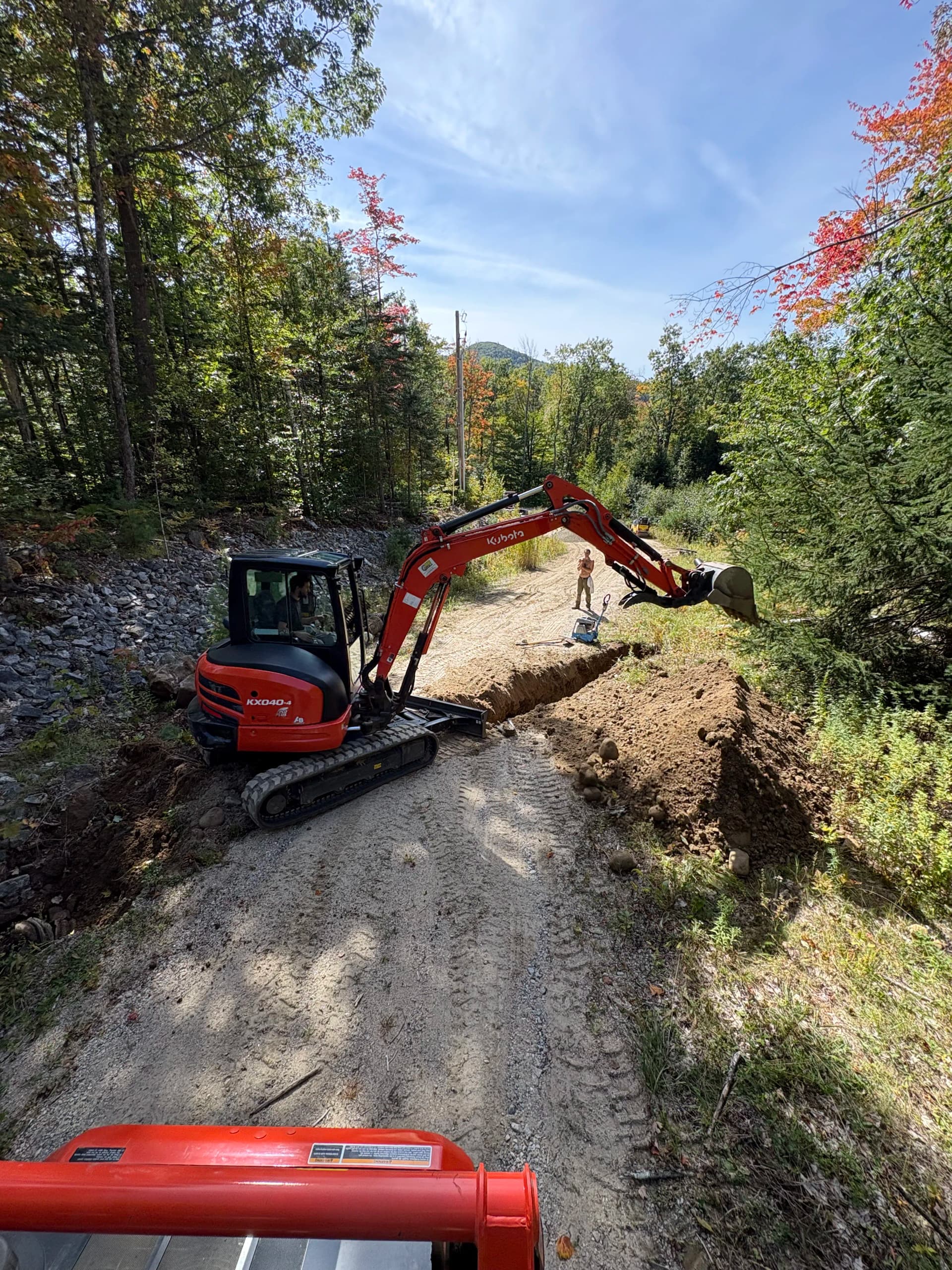
A long driveway that keeps washing out isn't just an annoyance - it's a sign the drainage underneath isn't doing its job. That's exactly what we ran into on this one. The existing stormwater culvert had failed, and without water moving away from the road properly, the gravel surface was taking a beating every time it rained.
Here's the thing about drainage: you can re-grade and re-gravel all day long, but if the culvert underneath is done, you're just buying yourself a few months before the same problems come back. So we tackled both. We dug out the failed culvert, replaced it, got the trench properly compacted, and then moved into re-grading the full length of the driveway.
Re-grading isn't just pushing material around. It's about restoring the crown and pitch of the road surface so water sheds off to the sides instead of pooling and saturating the base. When the base stays dry, the gravel stays put. That's what makes the difference between a driveway that lasts and one that turns into a muddy mess every spring.
Once the grade was dialed in, we brought in fresh gravel and finished the surface. What you end up with is a driveway that rides smooth, drains correctly, and is built to hold up through the wet and freeze-thaw cycles that hit the Mount Washington Valley hard every year. Good bones underneath mean fewer headaches down the road.
If your driveway is showing ruts, low spots, or soft sections that never seem to firm up, drainage is usually the root cause. It's worth getting eyes on it before another wet season makes it worse.